
What is NCCO?
‘State-of-the-art’ Unique Technology
Nano-Confined Catalytic Oxidation (NCCO)
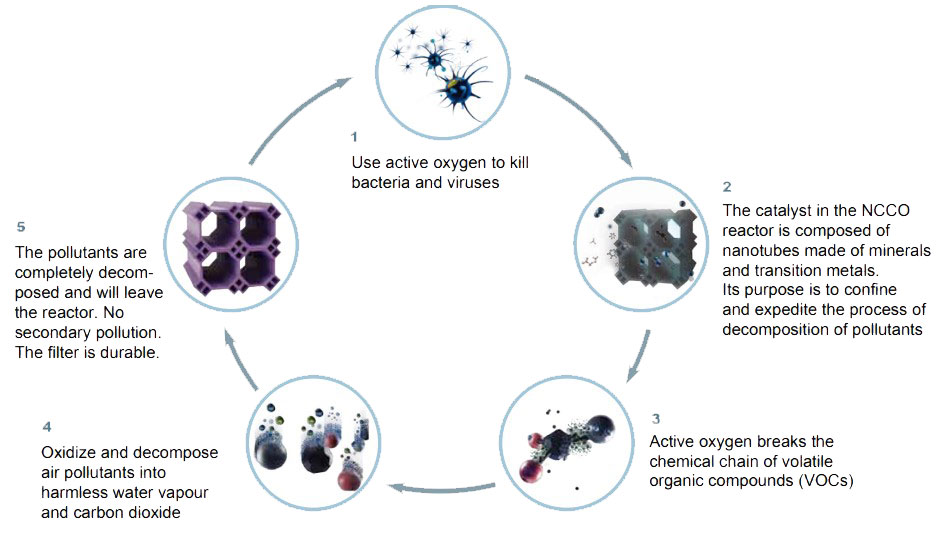
At the core of NCCO is its ability to adsorb and catalytically decompose bacteria, viruses, volatile organic compounds (VOCs), formaldehyde, and other airborne pollutants into harmless water vapor and carbon dioxide, all while keeping ozone and byproducts within safe limits. This process not only provides long-lasting, sustainable purification—reducing waste and maintenance—but also optimizes indoor air quality for homes and workplaces, fulfilling modern environmental, health, and ESG standards. NCCO’s technology offers powerful SEO positioning for brands targeting advanced, eco-friendly air treatment solutions that deliver proven results in health protection and pollutant removal.
Advantages of NCCO
Super powerful decomposition of medically harmful gaseous pollutants such as formaldehyde, xylene, benzene, acetone and phenol
Does not release secondary pollutants compared to traditional adsorbent materials such as activated carbon
NCCO reactants are recyclable and self-sustaining thus can be reused repeatedly, providing significant savings in labour and running costs
Uses mineral material as reactant and so preserves the external environment
Benefits of NCCO
Disinfects and Deodorises – Improves hygiene in critical areas
Reduces the number of air changes – Provides running cost benefits
Removes TVOCs – Reduces effects of medically harmful fume pollutants
Protects health of employees – Provides better working environment and increases in productivity
Kills bacteria and viruses e.g. H3N2 – Provides significant protection to individuals
Maintains good air quality – Provides a better living atmosphere and environment
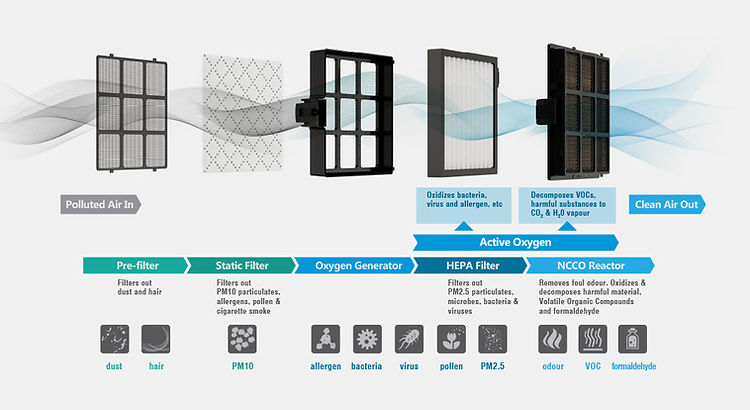
Collects allergens – Using HEPA Filter (HEPA 13 – Medical Grade), reduces allergic reactions
Prevents inhalation of suspended particulates e.g.PM2.5 protection, improving Indoor Air Quality (IAQ) to EXCELLENT class
Removes smoke and harmful fumes – Providing personal and commercial benefits
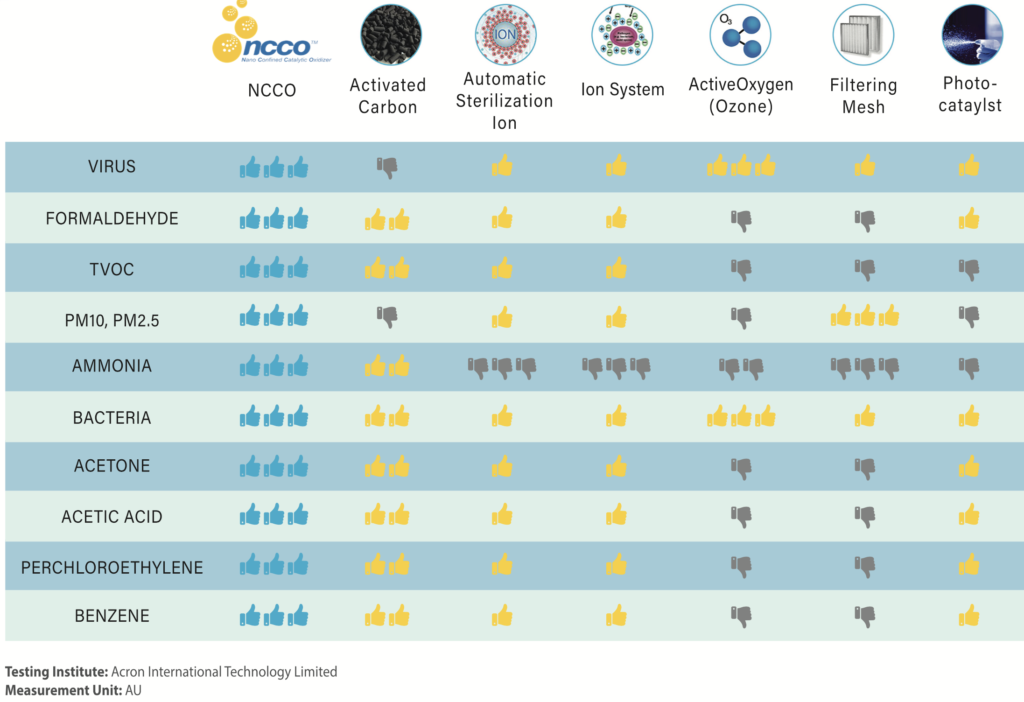
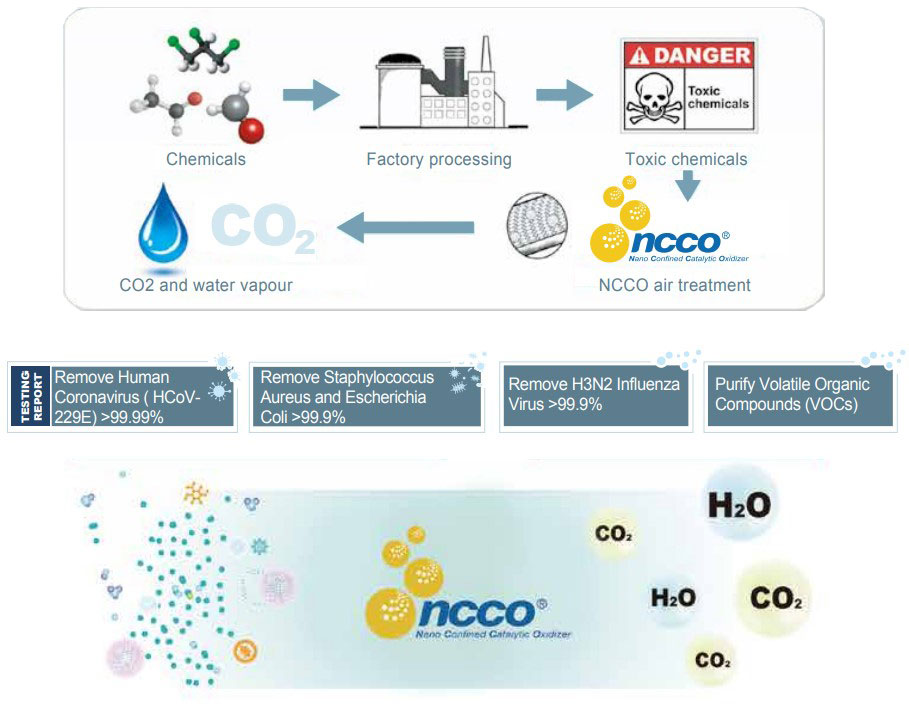
NCCO Air treatment system removal rate
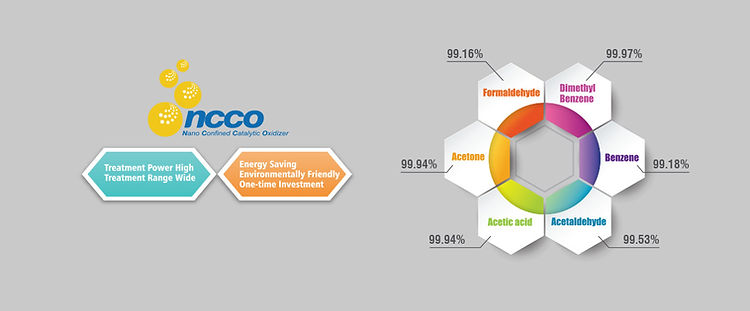

Our innovative NCCO technology enjoys the protection of a number of World-Wide patents including
INTERNATIONAL PATENT
CHINA UTILITY MODEL
CHINA INVENTION PATENT
JAPAN UTILITY MODEL
JAPAN INVENTION MODEL
Certification
Our NCCO technology has been tested by Internationally accredited authorities, proving excellent pollution removal power and effectiveness when an environment is exposed to – Formaldehyde, TVOCs, Ammonia, Ozone, Respirable Suspended Particulates, Airborne bacteria and influenza virus removal H3N2.
Our units are also certified to CE compliance of the following European directives
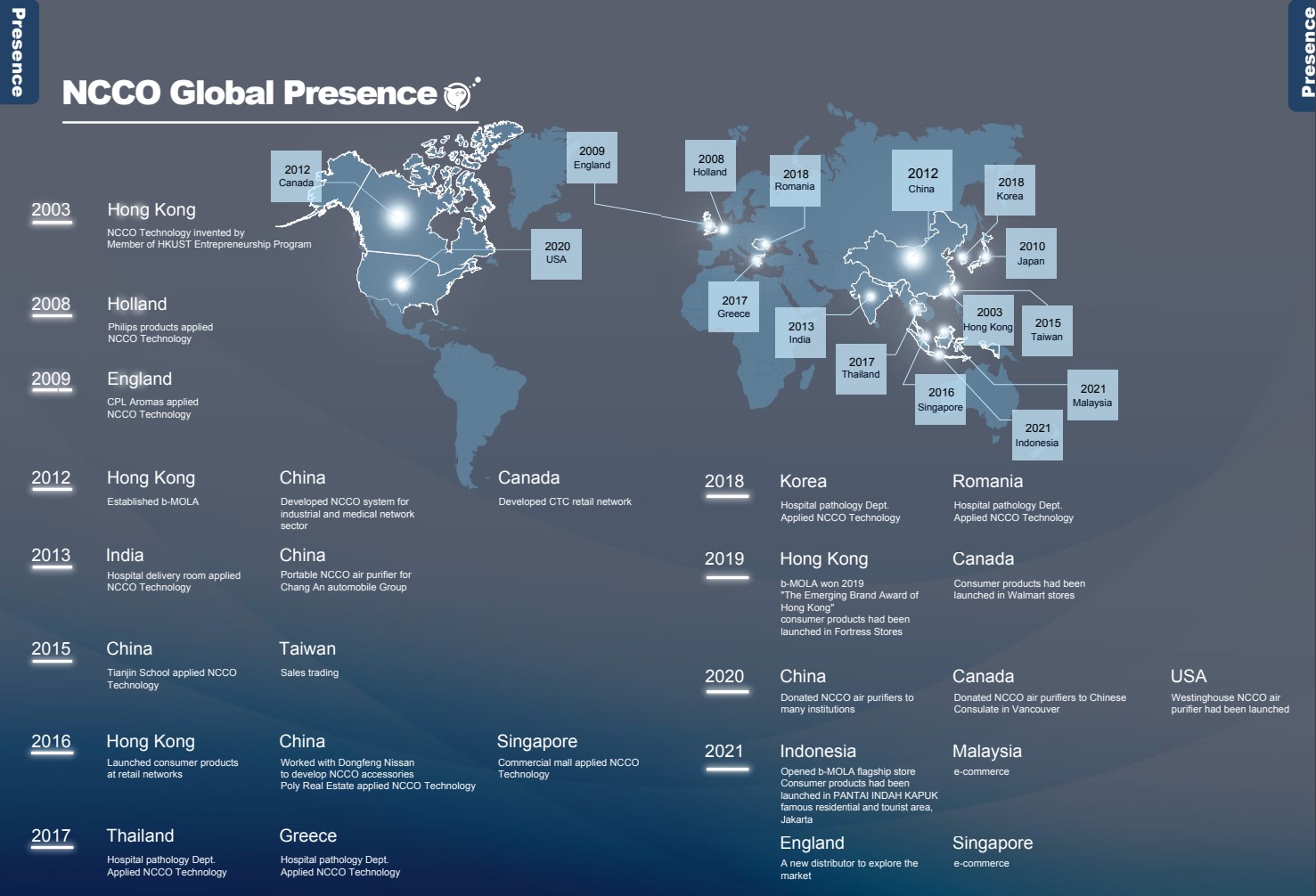
LVD – Low Voltage Directive – 2014/35/EU
EMCD – ElectroMagnetic Compatibility Directive – 2014/30/EU
RoHS – Restriction of Hazardous Substances Directive – 2015/863 (RoHS 3)
We are a registered ISO 9001:2015 Company